May 18, 2026
First-time World Heart Report on Congenital Heart Disease
 For the first time, the World Heart Federation is dedicating their annual report to congenital heart disease (CHD)!
Long-time Children’s HeartLink partner Dr. Krishna Kumar led the development of the report and our Vice President of Global Strategy and Advocacy Bistra Zheleva was part of the writing and review group. The report also features many of our collaborators and cites important work our partners and staff have published over the years.
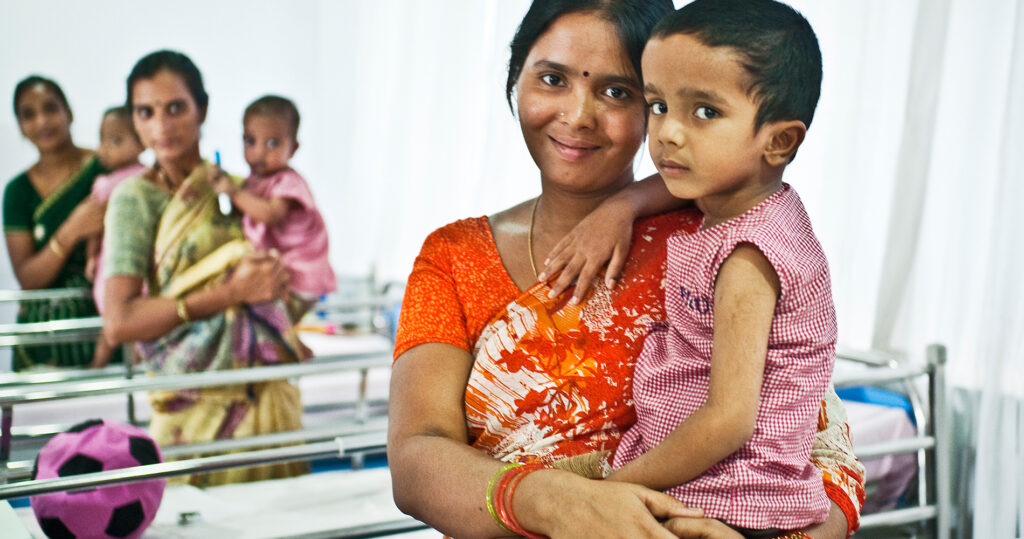
The report highlights the dire reality that most children in the world have zero access to lifesaving heart care. It provides a comprehensive look into CHD, the challenges for diagnosis, treatment and lifelong care, and what is needed to address inequities in access to care.
It also reaffirms the need for more global attention and support for the WHA Resolution on childhood-onset heart disease, which calls on countries to develop national strategies to increase access to heart care.


The Invisible Child: Childhood Heart Disease and the Global Health Agenda describes the burden of heart disease in children, outlines the barriers to improving access to quality care and provides examples of locally driven success.
Sign up for Children’s HeartLink updates!
About Congenital Heart Disease
Congenital heart disease is the most common birth defect. Historically undercounted due to diagnostic technology capabilities, environmental and geographical factors, the report indicates CHD currently affects about one in every 50 live births–higher the one in 100 that’s commonly cited. At least one third with the condition will need treatment in their first year of life.
The report emphasizes that CHD is highly treatable. Over 97% of affected newborns will reach adulthood with access to proper care. Yet, it is the leading cause of infant deaths among all non-communicable diseases across all regions of the world. This is largely due to inequities in access to care.
 Barriers to Treatment
According to the report, most children live in pediatric heart health “deserts” where there is no or little access to care. This fact is underscored by huge disparities in mortality based on geographic region and resources. Most deaths from CHD occur in low- and middle-income countries (LMICs). But even within high income countries like the U.S., deaths from CHD are up to eight times higher in poorer communities than wealthier ones.
Another factor affecting the lack of timely treatment in LMICs is the substantial financial costs. Surgical costs often exceed a family’s annual income in LMICs—preventing them from pursuing treatment or forcing them into life-altering debt.

A Continuum of Care
The report explains that a continuum of care is needed to effectively address CHD. This is because CHD encompasses a wide range of conditions that vary in severity and complexity. This spectrum of structural heart abnormalities demands different levels of care, including critical diagnosis periods, treatment plans, healthcare system requirements and clinical expertise.
Several other variables compounding the need for a continuum of care are cited:
- Adult CHD: As more children with CHD survive into adulthood due to improving diagnosis and treatment, there is a growing population of adults with CHD who need continued care throughout their life.
- Adverse mental health or neurodevelopment outcomes: Studies show that 30-50% of children with CHD are diagnosed with mental health or neurodevelopment conditions such as PTSD and impairments in motor and language skills, learning and cognition, and social and emotional functioning.
- Social stigma: Individuals with CHD may experience social exclusion and marginalization that compounds their challenges. This may result in families hiding the condition, missing follow-up care and not accessing appropriate services and accommodations that can help those affected thrive academically, socially and professionally.
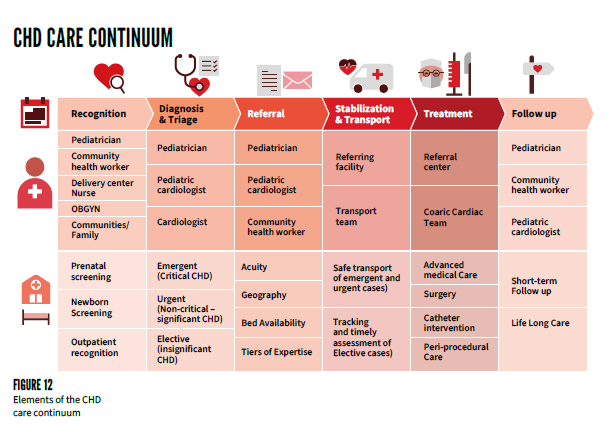
To develop a comprehensive and high-quality pediatric heart program that can effectively address CHD in a holistic and timely manner, including the additional factors indicated above, requires
- A specialized and multidisciplinary workforce,
- Quality facilities and medical equipment,
- Strong health systems and policies and
- Sustained investment for lifelong care.
Children’s HeartLink: an Organizing Force in Overcoming Inequities
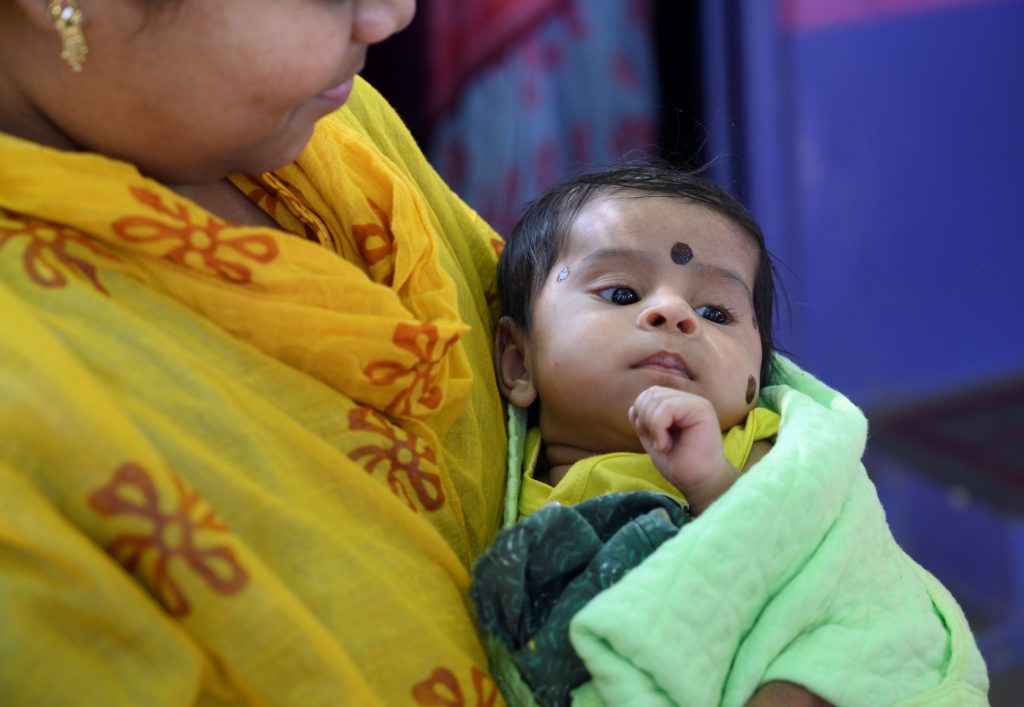
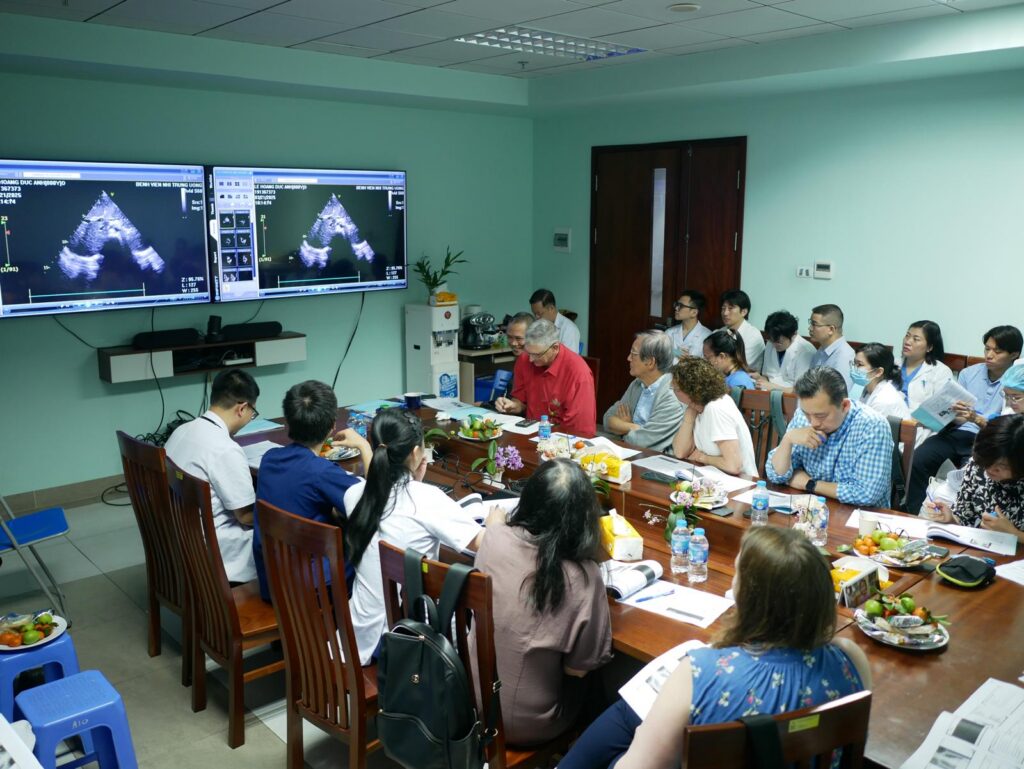
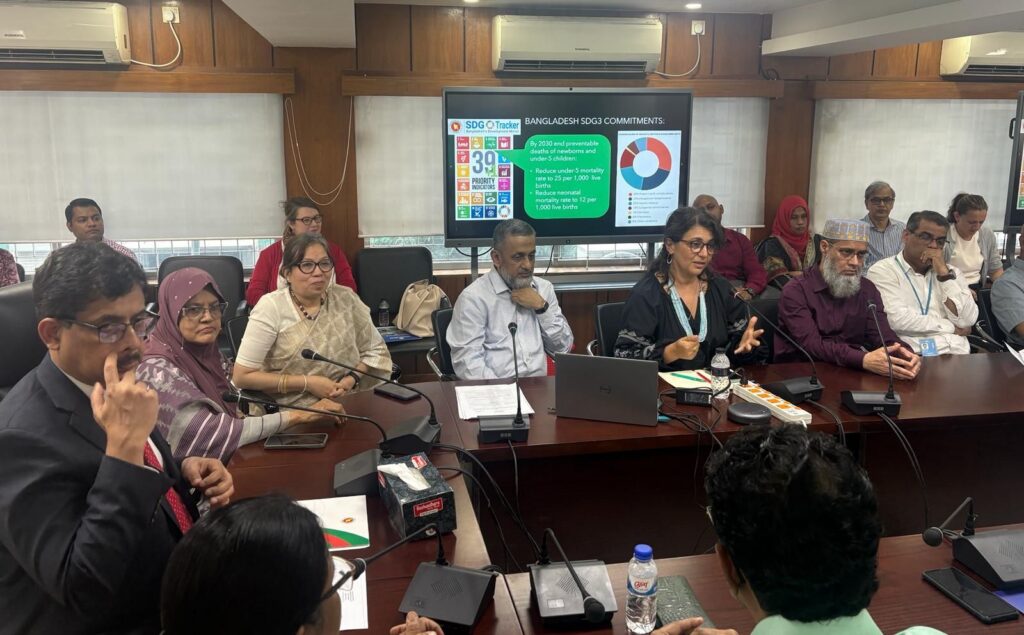
The report highlights several initiatives that can help overcome access inequities in pediatric heart care. Many included are projects Children’s HeartLink has collaborated on or are solutions we already practice and support. See some examples below:
Taking Action
The World Heart Federal calls for increasing country-level capacity to care for people with CHD, developing an adequate workforce, closing the data gap, improving financing for care and engaging with various stakeholders from families to government leaders to ensure pediatric and congenital heart care is an integral part of any national health system.
This report highlights the transformative force in Children’s HeartLink’s work—from supporting regional CHD services through long-term partnerships and training to advocating for systemic changes and resources that’ll move care towards equitable access.
We’re honored to have many long-time partners and staff whose research and work has shaped our understanding of the condition and its demands for care.
Join us as we continue to drive change in pediatric heart care in underserved parts of the world.


