February 4, 2026
XR Pilot Program: Revolutionizing Heart Care Training with Extended Reality
Originally Published March 23, 2025
Updated February 4, 2026
A global approach to improving care for children with congenital heart disease.
One of the greatest challenges in transforming pediatric heart care worldwide is ensuring that medical professionals have the most up-to-date and practical training possible. The need for skilled clinicians is critical, especially when it comes to treating congenital heart disease (CHD) in low- and middle-income countries.
CHD affects millions of children worldwide, with 1.3 million babies being born with a heart defect each year. 90% of these babies live in parts of the world where they lack access to the heart care needed to survive and thrive. There simply are not enough doctors and nurses trained to care for them. But what if there was a way to elevate training for pediatric cardiologists, nurses, surgeons and other members of the heart care team despite reduced geographic limitations?
Children’s HeartLink is seeking to answer that question as we explore whether extended reality (XR) can revolutionize heart care training. Can immersive experiences increase skills and knowledge to better care for children with heart disease? XR is a cutting-edge combination of virtual reality (VR) and augmented reality (AR) technologies that could transform the way medical professionals learn and practice.
How XR could enhance heart care training
Traditionally, Children’s HeartLink medical training for heart care teams involves hands-on experiences in clinical settings. The sustainable training model we use often involves medical volunteers from leading heart care programs traveling to train with low-resource hospital partners in Bangladesh, Brazil, China, India, Malaysia and Vietnam.
While these training visits are essential, they’re 100% funded by donations to Children’s HeartLink. Our community of supporters make this travel and training possible and without them these training opportunities don’t happen. The introduction of training with XR technology changes the conversation by offering fully immersive, interactive virtual environments that replicate heart surgery, diagnosis and patient care. With them, clinicians can prepare for complex heart procedures side by side — from half a world away.
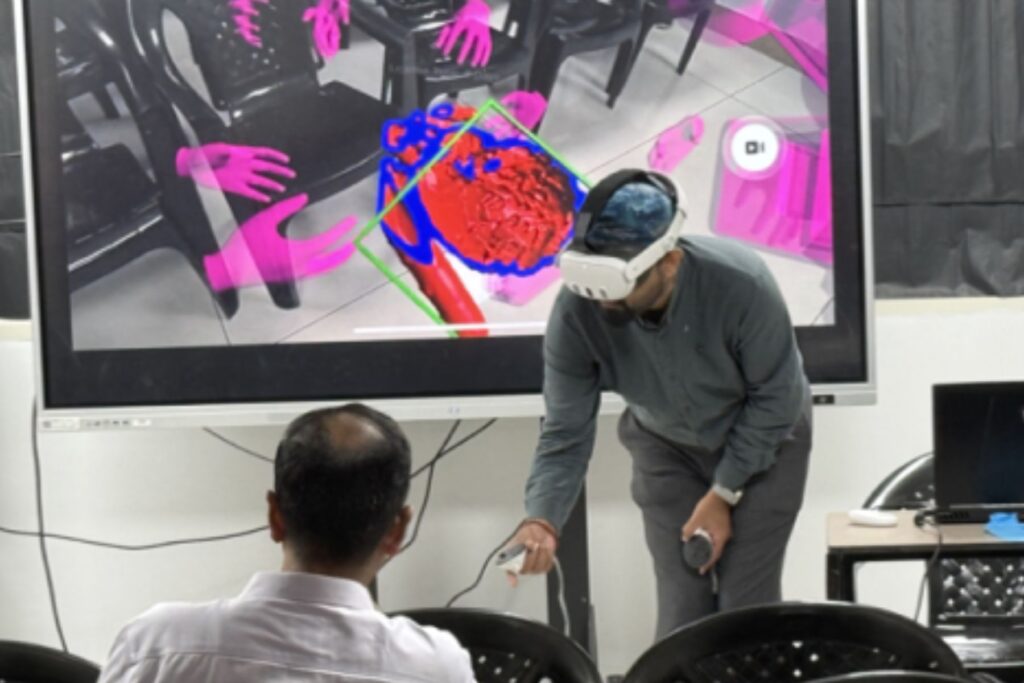
Because XR can be accessed from anywhere with an internet connection, it creates a cost-effective space for learning. This could open new opportunities for clinicians in underserved regions who may not have easy access to specialized training programs.
Pictured: Dr. Mahesh Kappanayil from Children’s HeartLink Center of Excellence Amrita Hospital Kochi, India, demonstrating the XR software he developed that will be used in this new project.
The project that’s extending XR to pediatric heart care teams
“With XR, heart care teams can view and discuss rare or complex defects as many times as needed, allowing them to thoroughly plan and gain confidence before entering the operating room,” said Anne Betzner, vice president of program and evaluation at Children’s HeartLink.
As part of our ongoing mission to transform pediatric heart care around the world, Children’s HeartLink is integrating XR training into a pilot training program with the help of our hospital partners and Centers of Excellence. These hospitals are already providing high-quality care and training to local healthcare professionals. By exploring XR training programs, we’re able to bring lifesaving virtual training opportunities to clinicians in countries like India, Brazil, Malaysia and beyond — regions where access to lifesaving heart care for children with CHD is limited. Leading this initiative alongside Dr. Kappanayil is Children’s HeartLink volunteer Dr. Rafael Guerrero from Alder Hey Children’s Hospital in Liverpool, England.
This project, funded by The Ping and Amy Chao Family Foundation Transparent Fish Fund, allows participants from around the world to interact with CT scan-based 3D models of children with CHD, enhancing case discussions and understanding of complex heart conditions.
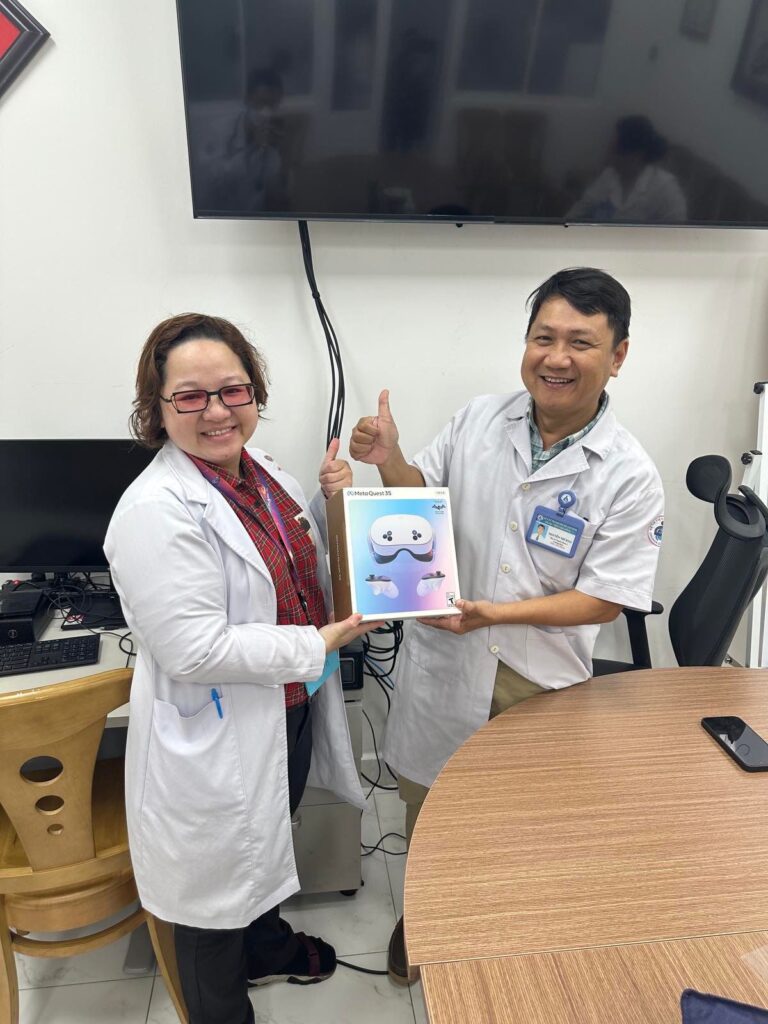
The potential of this project is lifesaving.
It will explore whether XR technology can better equip heart care teams to manage complex heart care procedures, leading to better outcomes for children with heart disease.
Pictured: Clinicians at Children’s HeartLink Center of Excellence Nhi Dong 1 in Ho Chi Minh City receive the headset they’ll use with the XR technology pilot program.
Saving lives through training innovation
The combination of extended reality and expert pediatric heart care is paving the way for a more efficient, scalable and accessible training model. As the technology continues to evolve, we expect XR to become an integral part of the way healthcare professionals around the world gain critical skills in treating children with heart conditions. By embracing these innovative tools, we are investing in the future of pediatric heart care and making a tangible difference in the lives of children globally.
“This global approach could absolutely enhance the quality of heart care training,” Betzner said. “It could also ensure that heart care team in low-resource environments can maintain consistent high-quality training relationships with medical volunteers even when in-person training is not an option due to limited funding, a pandemic or other travel concerns.”
We believe that every child deserves a health heart, no matter where they are born. XR is just one of the many ways we’re working to make that a reality. Stay tuned for more updates on how this technology is helping us shape the future of heart care by signing up for our newsletter below.
Project Update – 2025
Following the launch of this project, XR technology has already proven its value in pediatric cardiac care. In a series of virtual sessions, cardiologists and surgeons from India, Brazil, Vietnam, Malaysia and the UK joined immersive discussions of 11 active cases. Using highly-detailed 3D models of actual patients’ hearts created by Dr. Kappanayil’s team, clinicians shared insights, developed treatment plans and improved their understanding of rare and complex heart disease in children.
The exciting results show meaningful impact for the future of heart care training:
- In 100% of cases, recommendations from the virtual group shaped the care plan.
- Four children have already undergone successful surgery.
- Two are receiving medical management and five more surgeries are being planned.
- Participant understanding and diagnostic accuracy improved from 51% to 100%.
- Clinicians reported a significant increase in confidence.
This project showcases what Children’s HeartLink does best: facilitating sustainable, collaborative training across borders. These sessions reflect growing global demand for innovative, cost-effective learning tools, with interest from teams in Japan, Israel, Singapore, Colombia, and beyond.
Despite concerns over time zones and busy schedules, participation remained strong across multiple months of virtual meetings, highlighting both the enthusiasm and the value clinicians place on this new model for global training.


